Neighbors are coming together to protect our neighborhoods.
We started in 2019, with just a handful of highly motivated residents from across California. Together, they created the first draft of our Statewide initiative and submitted the proposal to the State Attorney General’s office. Since then, we have become a movement, an unshakeable collection of residents protecting our neighborhoods: from our yards to our parks, to our open spaces, to our local cities: we are here to defend ourselves against the Wall Street Investor in My Backyard -WIMBY’s.
Why we do what we do
The inner workings of local government leave most people cold. Even though what a local government does affects their daily life more than any other level, most people do not participate.
That is not us. Which is why the issue of the level of control local governments have over some of the most basic quality-of-life decisions our cities and counties face has brought us together under Our Neighborhood Voices (ONV).
Ever since California was founded, a conflict between Sacramento, the state’s counties, and the continually growing number of incorporated cities has created tensions difficult to resolve. From 1879, when charter cities were first established in the State’s constitution, to today, when about a quarter of the state’s 482 cities have charters, the reason for becoming such a city has been clear: to prevent state interference in local matters, such as the regulation of municipal affairs.
One of the most basic of municipal affairs is land use. This determination of a resolution between competing interests, such as residents, retail and industrial businesses, land developers, and the local government itself, makes our cities into places where people want to live, work, or do business. Or not. Those decisions are not made by a “cookie-cutter.” Every city has unique qualities nurtured over years of hard work by people for whom local government is the key to pursuing happiness, with the lynchpin to that happiness being comfort with their way of life.
When California became the largest state in 1962, it was a testament to how attractive the state was to live in. With that growth, how we were going to house all those arrivals became paramount for local governments. Missteps in decisions made since then have exacerbated that issue. Some of those include water supply, road building, housing expansion, and the destruction and then haphazard restoration of public transportation systems.
Solutions to the problem of where to house all those who not only migrate to California but also are born here are not a “one size fits all” policy. This is why ONV is advocating for local solutions rather than top-down directives to meet the need for places to live for everyone.
To fine-tune those prospective solutions, we will be posting stories about how people like us, local government-oriented problem solvers, have implemented ideas that are working for them. We hope you find them inspirational and informative in reaching the goal we all seek: a reasonable and successful solution to our housing dilemma.
1,000+
Events, Meetings, Rallies & Fundraisers
43+
Cities & Agencies
Our Neighborhood Voices FAQ’s
The how, the why, and where we are going.
A zoning alternative that regulates the physical form and scale of buildings (how they look and fit on the street) rather than dictating the specific land-use type or limiting the number of units inside.
YIMBY stands for “Yes In My Backyard.”
But it really should say “Yes In –Your- Backyard.”
YIMBY is a business, political and social consortium of pro-housing-density advocates who assert that any increasing the supply of housing will make it more affordable. This is despite the fact that all of the data and peer-reviewed economic research refute the notion that densifying residential neighborhoods makes them more affordable. The data also refutes the assertion that local zoning and land-use regulations make local residential neighborhoods less affordable. In fact, the data clearly shows the opposite impact, density engenders unaffordability.
YIMBYs actively campaign against local zoning, such as single-family neighborhoods, and advocate for increased housing density in all neighborhoods, even multi-story apartment/condominium buildings in established single-family or rural neighborhoods. Among the restrictions their statewide mandates supersede are parking requirements, height restrictions, and setback requirements. So, projects they support are built upon the assumption that tenants will park their cars on the local neighborhood streets, whether that amount of parking is available or not. Neighborhoods’ ability to accommodate the increased automobile traffic, water and sewer capacity demands, local school capacities, fire department, paramedic and police department capacity to ensure public safety, are all dismissed as irrelevant constraints, and have been made illegal to consider when placing a high-density residential project. Paying for these impacts of the increased density is forced upon, and shouldered by the original residents, the established neighbors. The required increase in taxes is one factor driving up local unaffordability as density is increased.
YIMBY organizations are well-funded by concealed and anonymous sources. However, we might take a clue from the required disclosures of sources of campaign financing for the elected officials who push through the statewide YIMBY initiatives in the form of the hundreds of new laws over the past few years. These disclosures reveal large residential building companies, real-estate speculators and the building trade unions – those who gain financially by increasing the number of large building project opportunities.
When we talk about YIMBY, we are talking about state control of local zoning. This is about a centralized planning scheme dictated by industry-funded politicians and corporate interests in faraway offices, even overseas investors. These are big corporations, private equity funds, speculators, building trades, materials suppliers, etc. It is central planning through Sacramento, and it does not work for our streets.
YIMBY is about taking away power of the neighborhood to self-govern. It is the active push to deny that development decisions will be made at the local level, even though the consequences of building a new complex, changing a street, or altering the character of our community are felt by us—the people—directly and immediately. YIMBY has seized the authority to decide what happens to our homes, our infrastructure, and our quality of life.
So, YIMBY is not just a phrase; it is a funded set of shills, lobbyists, propagandists and their bought-and-paid-for set of legislators in Sacramento. It’s the treatment of our community as just a piece of undeveloped land waiting to be exploited for profit. It’s the denial of your right, power, and responsibility to say “yes” or “no” to what happens on your own block, your own street, and your own backyard. YIMBY demands that your voice is silenced, and enforces, by law, zoning that reflects a distant corporate profit agenda and the profit opportunity of speculators, not the reality of your neighborhood.
NIMBY is short for “Not In My Backyard.”
And let’s perfectly clear: it is a pejorative term. It’s not a neutral description; it’s a loaded label used by those outside our borders—by developers, by city planners, by outside interests—to dismiss legitimate concerns and local self-determination as mere selfishness or obstructionism.
Now, where does this term come from? It’s not some slick, modern invention. The phrase itself has a history, stemming from a slightly older, more direct resistance to development. It evolved as a shorthand way for people in specific localities to assert their boundary and refuse to accept changes that affect their immediate environment. It’s fundamentally a reaction against top-down decisions being imposed upon established communities. The term first appeared in newspapers in February 1979 regarding nuclear waste disposal (Three Mile Island), likely popularized in the early 1980s by British politician Nicholas Ridley to describe community opposition to development.
What NIMBYism really is, though, is the inherent, totally reasonable desire for local control. It’s the fundamental belief that the people who live here—the neighbors, the residents, the established community—have the primary, legitimate authority to decide what happens on our streets, what goes into our neighborhoods, and what kind of development is appropriate for us. We deserve that control. We are the ones who actually live here, and we know our community better than anyone.
When someone labels us NIMBY, they are trying to dismiss our valid concerns—concerns about traffic, infrastructure strain, property values, and the character of our homes—as simply being selfish obstacles to progress. But we aren’t obstacles; we are the community! We are the people who hold the real stake in this land.
So, next time you hear that term, remember this: NIMBY isn’t about being against progress; it’s about demanding that any progress be handled thoughtfully, responsibly, and with respect for the community that already exists. We don’t want to be bypassed; we want to be heard. We want the power to regulate our own zoning and development decisions, right here, on our own turf. That is what we demand.
California is losing population, interest rates were at historic lows, Wall Street investment firms are buying homes, and Airbnb is converting existing homes into vacation rentals. The housing market is complicated; there is no silver bullet.
Who pays for the new infrastructure? The sewers? The Schools? The traffic impacts? According to the new state laws, not the new projects, the existing residents do.
Building housing and building affordable housing are two completely different market segments. How many of these state laws require actual, enforced, non-owner-occupied affordable housing? None.
We’ve tried. In the rare circumstance we won, they turned their backs on us. Sacramento is the proverbial snake-pit of back-room deals, scratch my back, I’ll scratch yours. Both parties are complicit; the Democrats have the votes. The Republicans go along to get along or believe the narrative. Both parties have the monetary interests behind them
Sacramento has failed. There are two main weapons in the assault on California’s neighborhoods: New laws and new regulations.
Sacramento lawmakers have passed over 400 laws in the last eight years alone, stripping away local control over development and allowing large developers to bypass nearly all local rules. That’s right — over 400 laws! These laws supersede the local authority almost entirely. There is literally nothing cities can do.
What have those 400 laws done?
Build luxury homes.
Lawsuits are draining. Some lawsuits are winners, others are losers. Ultimately, filing a lawsuit is often fruitless. When there is a win against a recently passed State law, the Legislators merely update the broken part.
Every lawsuit costs hundreds of thousands of dollars and fails; the money is better spent on a statewide initiative. Years of court decisions, court battles, anger, emotion, and time only allow for more State laws to be passed.
Under state law, in order to get on the ballot, we’ll need to obtain 874,641 valid petition signatures from registered California voters. Accounting for the signatures that will inevitably be rejected, we will need a total of 1.2 million signatures. Once we qualify for the ballot, we will begin our general election campaign to persuade Californians to vote to restore local voices in important land-use decisions.
Our efforts will require significant funding and a tremendous amount of volunteers. The process is long; it is not a sprint but a marathon.
One of the most pernicious lies the political establishment has spread is that anyone who cares about the future of their neighborhood automatically opposes new development, especially new affordable development.
This is the myth of the NIMBY, which stands for “not in my backyard.” Tellingly, the term was coined by corporate marketers in 1979 to smear residents in New Hampshire and Michigan who opposed the construction of new nuclear power plants in their communities (this was in the immediate aftermath of the accident at the Three Mile Island nuclear plant in Pennsylvania, when fears about the dangers of nuclear energy were at a peak). Big corporations used the term in the 1980s and 1990s to demonize people who opposed new landfills, prisons, oil refineries, and other industrial sites in their communities.
ONV leadership and supporters are not NIMBYs, nor are we about saying no. We support affordable housing in our communities. We support our neighborhoods to be as thriving and diverse as possible. We support every community to choose its own destiny. We support local choice, local control, and the local decision-making process.
We oppose top-down state mandates that make housing less affordable and remove local control on planning.
The initiative was drafted to ensure compliance with relevant state environmental, fair housing, and anti-discrimination laws.
The initiative does not conflict with the California Environmental Quality Act (CEQA). Single-family neighborhoods are not inherently discriminatory, and many people of color own and rent homes in these neighborhoods that represent the main means of building wealth for them. Now that BIPOC single-family neighborhoods exist, Our Neighborhood Voices finds it ironic and disturbing that there is an effort to undermine and devalue the importance of single-family homes. These are the exact neighborhoods that are being targeted by these State laws.
We need to build more of the RIGHT KIND of housing: the kind that’s affordable for middle, working, and lower income Californians.
Enabling developers to flood the market with market-rate and luxury housing, as recent legislation does, only creates more expensive housing that few Californians can afford. If dense, market-rate, and luxury multifamily buildings were the solution, places like Manhattan, London, Moscow, and Hong Kong would be the most affordable cities in the world, not the least.
In contrast to distant state regulators, local governments are best positioned to know where and how to incentivize housing their communities need and want.
ONV has received significant donations from individuals and organizations. The initiative is supported by a statewide grassroots coalition of Californians that includes Democrats, Republicans, Independents and voters from every part of the political spectrum, including more than 100 local elected officials. Our list of supporters includes some 20,000 Californians just like you. In short, ONV is building a statewide coalition of community advocates, elected officials, and Californians from all walks of life who agree that it is time to restore our voice on local community decisions.
Recent state laws let developers tear down the house right next door to you and build a multi-unit, multi-story building – and you have no say in the matter. You’ll be demonized as racist, exclusionary, anti-homeless, and worse. Under these new laws, developers don’t have to conduct environmental reviews, provide onsite parking, or build affordable housing. In fact, they don’t even have to tell you what’s coming. You’ll find out when the bulldozers show up next door on a Monday morning. These laws are blank checks to developers.
The ONV initiative is the strongest weapon we have to fight back against these draconian laws, because it will restore our ability – YOUR ability – to speak out and impact what is happening in our own communities. If you believe that we should have a voice in our own neighborhoods, JOIN US and/or Donate today!
The politicians in Sacramento are almost unanimously removing all ability of your local government to make the most basic decision about your community:
Parking requirements? Gone. They say you no longer need vehicles because you’ll be using mass-transportation.
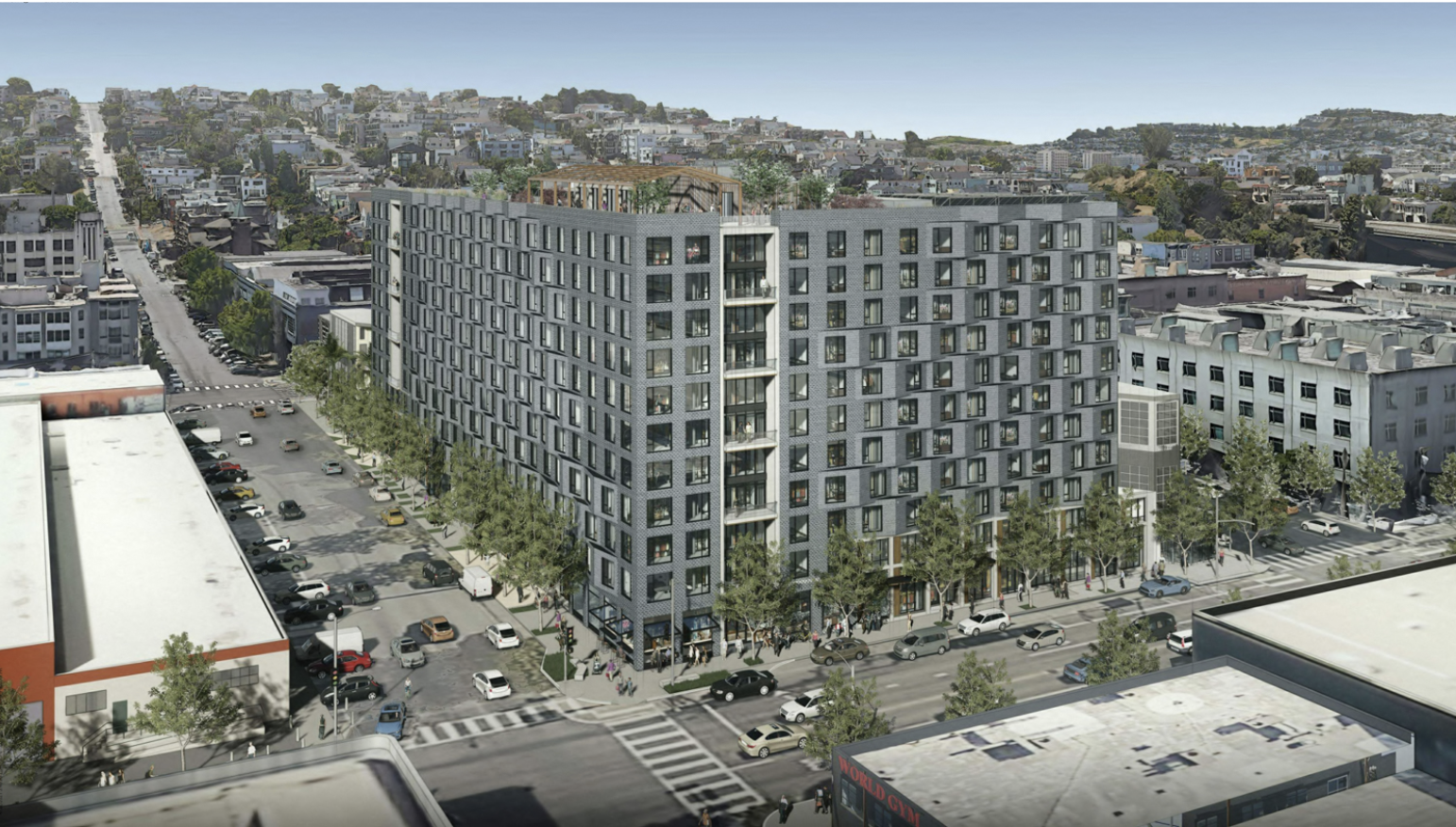
Height, size, and type of buildings? Gone, here come the square, towering monsters.
Single-family homes? Illegal and no more. Replaced with an investor-owned fourplex.
Affordable housing? No, all market-rate or luxury housing to replace that older affordable housing unit for 2-3 times the price of the older unit.
Impact fees for Public Safety, Parks, sidewalk, and infrastructure? Gone. Current residents will pay for the impacts of the new developments.
These new projects are buying older, affordable housing units or converting current commercial parcels into high-density, unaffordable market-rate units. This leads to gentrification and economic displacement in working-class neighborhoods and communities of color.
No more California Environmental Quality Act (CEQA) or local input on projects. This “streamlining” results in projects with little to no oversight from your local governance or community. No more input, as here comes a cookie-cutter, square building looking directly into your private space.
Dozens of new State mandates and laws must be implemented quickly every year. None of these new mandates or laws has associated funding for implementation.
Wall Street profits, Main Street pays. Many of these State laws are literally written by Wall Street lobbyists. Who do you think profits? Who pays? Your community pays for the impacts, Wall Street profits.
The Our Neighborhood Voices (ONV) initiative (view/download draft PDF) restores the authority of your local representatives to decide what gets built in your community, on your street, and right next door to where you live. It will amend the California State Constitution, enshrining those decisions at the local level. Lawmakers have used state statutes, which trump local laws and regulations. The ONV initiative overrides state statutes with this Constitutional amendment.